If your phones still work, replacing them can feel like a job for another day. Yet for many firms weighing up VoIP vs landline business systems, the real question is not whether calls can be made, but whether the phone setup still suits how the business operates now.
A lot has changed in recent years. Teams work across offices, at home and on the move. Customers expect quick responses. Costs are under more scrutiny. At the same time, older phone infrastructure is becoming less practical to maintain. That means the choice between VoIP and a traditional landline is no longer just a technical one. It affects flexibility, service levels and day-to-day efficiency.
VoIP vs landline business: what is the difference?
A landline business phone system uses the traditional telephone network through physical copper lines. It is familiar, straightforward and for years it was the standard choice for offices of every size. Calls are tied more closely to the physical premises, and adding lines or changing setups often requires engineering work.
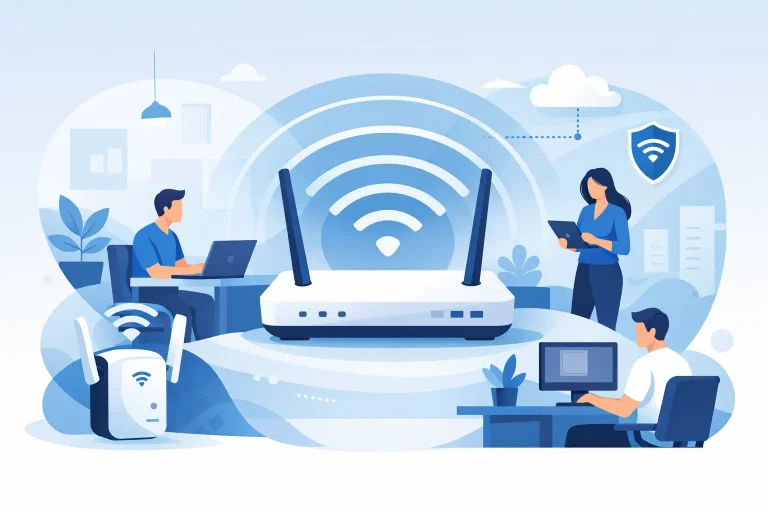
VoIP, short for Voice over Internet Protocol, carries calls over your internet connection instead. In practice, that means your desk phone, mobile app or computer can all become part of the same business phone system. Features such as call routing, voicemail to email and remote working support are built around that flexibility.
That does not automatically make VoIP right for every organisation. The best option depends on how your business works, what your connectivity looks like and how much support you want around installation and ongoing management.
Cost is not just about the monthly bill
Many businesses first compare VoIP and landline on price, which is sensible, but headline figures only tell part of the story.
A traditional landline setup may seem predictable if it is already in place. However, older systems can become expensive when maintenance is needed, parts are harder to source, or line changes require site visits. If your team is growing, moving premises or opening another location, those costs can rise quickly.
VoIP often lowers call costs, especially for businesses making frequent outbound calls or needing multiple users across different sites. It can also reduce the need for separate systems, because handsets, softphones and mobile access can sit under one platform. That said, VoIP should not be sold as a guaranteed saving in every case. If your current internet connection is not up to standard, you may need to invest in better broadband or network improvements to get the quality you expect.
For most small to mid-sized businesses, the more useful question is this: which system gives better value over the next three to five years, not just next month?
Reliability depends on the full setup
Landlines have long been seen as the safer option because they are familiar and independent of your office internet. That reputation is understandable. For many years, a traditional line was the dependable default.
But reliability today is about the wider infrastructure, not the label attached to the phone service. A landline system may still suffer from ageing hardware, line faults or limited support options. A VoIP system, when properly designed, can be highly dependable, but it does rely on a stable internet connection and a network configured to prioritise voice traffic.
This is where businesses can get caught out. A poor VoIP experience is often caused less by the phone platform itself and more by weak connectivity, old routers or an office network that was never designed with voice in mind.
That is why planning matters. A well-installed VoIP system should consider broadband resilience, handset choice, network performance and what happens if the main connection drops. In some cases, that might include failover options or diverting calls to mobiles so the business remains reachable.
Flexibility is where VoIP usually pulls ahead
If your team works from one fixed office, uses a small number of handsets and rarely changes, a landline may still meet your needs. Some businesses value that simplicity.
However, many firms no longer operate in such a fixed way. Staff may split time between home and office. Managers may need to answer calls while travelling. A business may have two or three locations but want customers to experience one joined-up phone service.
This is where VoIP tends to offer a clear advantage. Users can log in from different devices, calls can be transferred more easily between sites, and businesses can present a more professional front without needing complex onsite hardware. Adding a new user is also typically much easier than arranging another physical line.
For growing businesses, that flexibility matters. A phone system should support change rather than create extra admin every time the business evolves.
Features should support the way you work
Phone systems are often compared on features, but not every feature is useful. The aim should be to improve customer service and internal efficiency, not to pay for functions no one uses.
A landline system can still provide core calling reliably, and in some cases that is enough. But many businesses now expect more. They want voicemail messages delivered by email, hunt groups for incoming calls, simple call reporting, auto attendants and the ability to route calls intelligently during busy periods or outside working hours.
VoIP platforms generally offer more of these tools as standard or as straightforward add-ons. That can make a real difference for reception teams, busy offices and multi-site organisations trying to present a consistent service.
Still, there is a trade-off. More features mean more decisions about setup and user training. If those are not handled properly, the system can become confusing rather than helpful. The best result comes from matching the system to the business, rather than fitting the business around the system.
What about call quality?
This is one of the most common concerns, and rightly so. If calls sound poor, nothing else matters.
Traditional landlines have the advantage of being familiar and generally consistent. VoIP call quality can be excellent, often better than people expect, but only when the connection and network are fit for purpose. If your broadband is unreliable or heavily congested, call quality can suffer.
That is why it is worth assessing the full environment before making any change. Broadband speed is part of it, but so are latency, stability, internal cabling and network equipment. Businesses often assume they need to choose between modern features and clear audio. In reality, with the right setup, you should expect both.
VoIP vs landline business decisions for different types of company
There is no single answer that suits every business.
A small office with stable staffing, modest call volumes and no need for remote access may find a simple traditional setup still adequate in the short term. If it is working well and support remains available, there may be no urgent need to change purely for the sake of it.
A growing business, on the other hand, will usually benefit more from VoIP. If you are adding users, supporting hybrid working, managing calls across sites or wanting better visibility over how calls are handled, VoIP is normally the more practical fit.
For customer-facing teams, professional call handling can be just as important as the line itself. Missed calls, poor routing and clumsy transfers all affect the customer experience. In those situations, the additional control offered by VoIP can justify the move.
For operational environments, the picture can be more mixed. If internet resilience is weak in your location, or if there are specific legacy systems in place, the right answer may involve a staged move rather than a complete switch overnight.
The best choice often comes down to support
Technology decisions rarely fail because the product was wrong on paper. More often, they fail because the installation was rushed, the setup was generic, or support disappeared once the system went live.
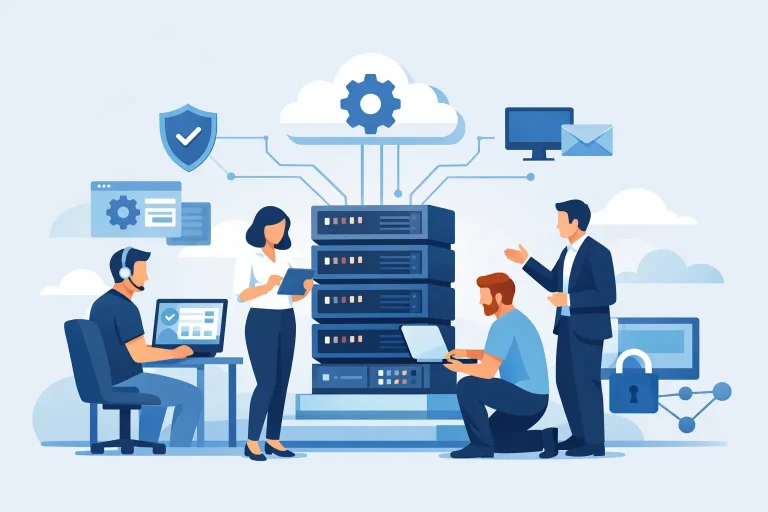
Whether you choose VoIP or keep a landline service for now, dependable advice matters. You need someone to assess how your team works, what your premises can support and where the likely pressure points are. That includes installation, configuration, user guidance and being available when something needs attention.
For businesses across North Wales, The Wirral and Cheshire, that local and practical approach tends to make a big difference. CATalyst Systems works with organisations that want clear recommendations, sensible pricing and ongoing support rather than a hard sell or an overcomplicated package.
So which should you choose?
If your priority is flexibility, scalability and modern call handling, VoIP is usually the stronger long-term option. If your business is highly static, your current landline setup is reliable and your needs are basic, keeping a traditional system for a while may still be reasonable.
The main thing is not to treat the decision as a box-ticking exercise. Your phone system sits at the centre of customer contact, team communication and business continuity. The right answer is the one that fits how you work now, and where you expect the business to go next.
A good phone system should make the working day easier, not give you another problem to manage.